Can You Beat a Polygraph Test?
Can You Beat a Polygraph Test?
It is one of the most common questions we hear before an exam. Someone has read a forum post, watched a movie, or heard a story from a cousin who "passed with no problem." So here is a straight answer: people try, a few believe they have succeeded, and the research shows the picture is more complicated than the internet makes it sound.
What a polygraph actually measures
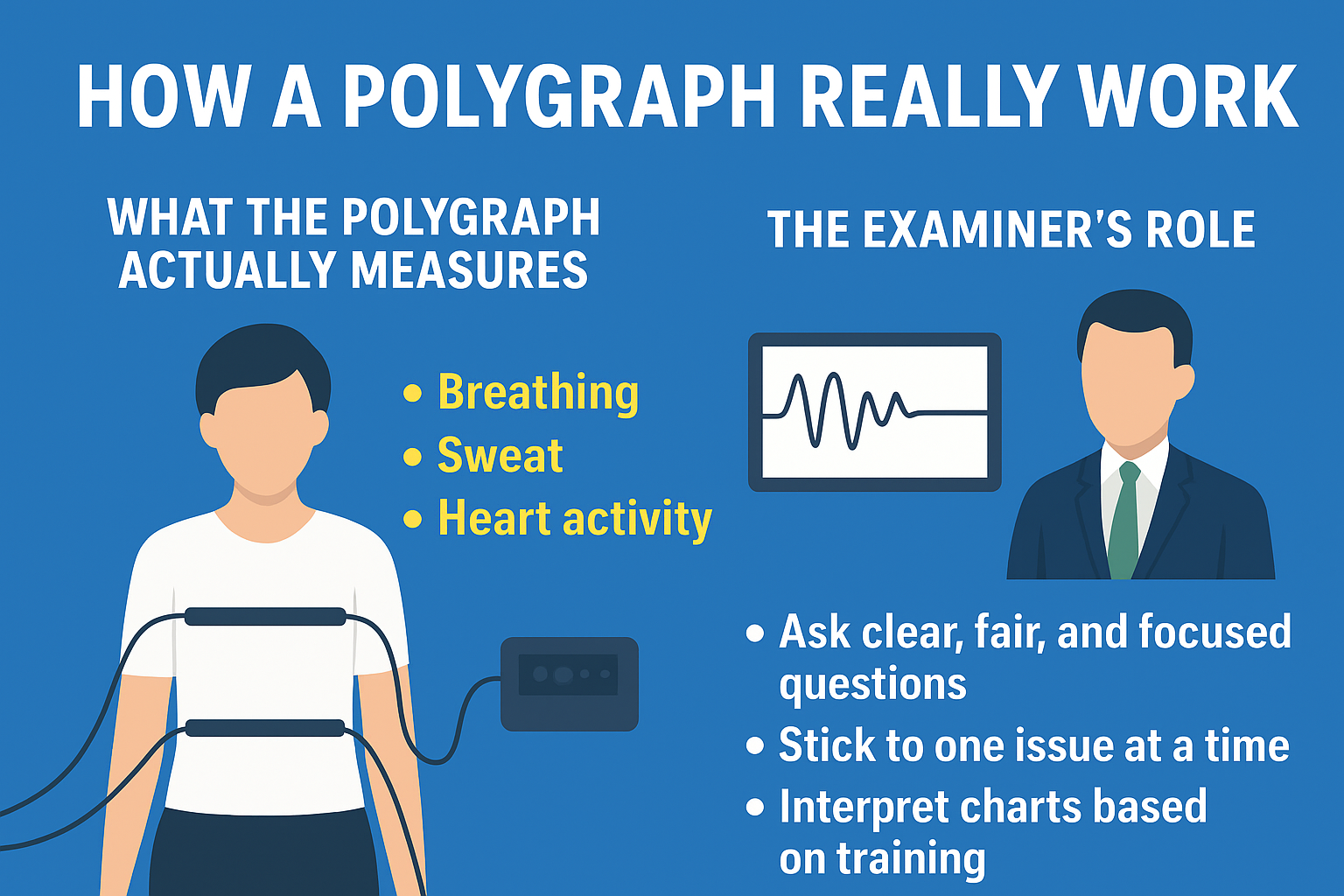
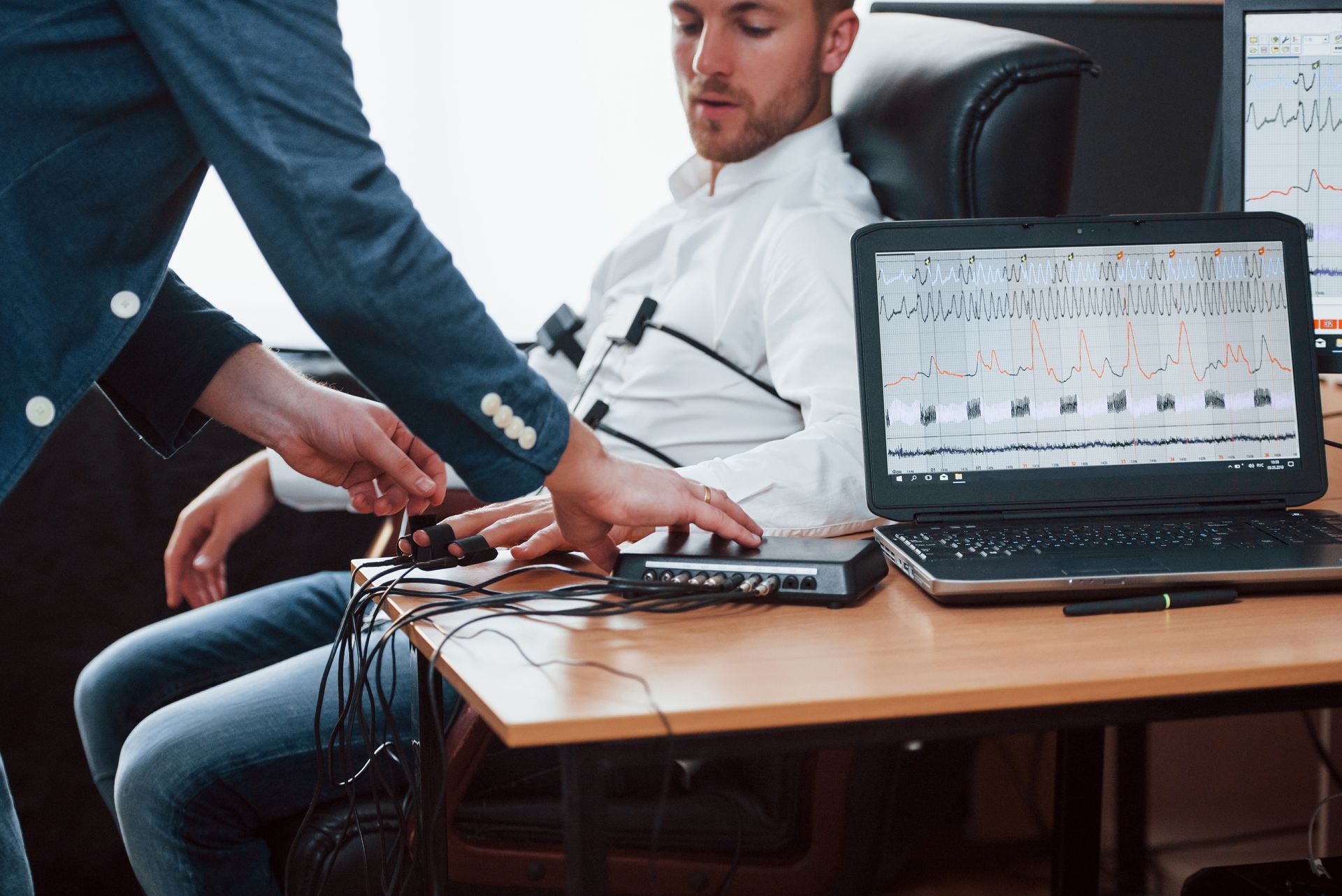
A polygraph does not read minds, and it does not detect lies directly. It records how your body responds while you answer questions. Sensors track physiological data you cannot control (heart rate, sweat gland activity, etc.). A trained examiner studies those recordings and scores them using a set method.
Think about the last time you were startled, such as a car cutting in front of you or a loud bang behind you. Before you had time to think, your body reacted. Your heart pounded, your breathing changed, and your palms got damp. This is the “fight, flight, or freeze” response, and it is an automatic, built-in alarm that protects us when we sense a threat.
A polygraph is built on a similar idea. When a person feels something is at stake, such as being caught in a lie about something that matters to them, the body can trigger a small version of that same alarm. You do not choose it and you cannot easily switch it off. The sensors record those physiological changes. A single reaction does not mean much on its own, because everyone has some.
Common misconceptions
"Being nervous will make me fail." Everyone is nervous. Examiners expect it. The test is built around comparing your reactions to different kinds of questions, not around whether you seem calm. A nervous person who is telling the truth is not treated as a liar for being nervous.
"The machine knows when I lie." The instrument records body responses. Examiners make the call, using a scoring system. That is why who runs the exam matters so much.
"A good liar can't be caught." Research on people with psychopathic traits, who are often assumed to be able to fool the test, has not found that they beat it more easily.
"If the result is inconclusive, I passed." Not so. "Inconclusive" means the recordings did not give a clear answer. It is an honest result, and it often leads to a retest.
"Medications or a few tricks will do it." Studies of common drugs have not shown that they reliably defeat the test. They can make the exam harder to complete, though.
What are countermeasures?
A countermeasure is something a person does on purpose to change their body's responses and confuse the results.
Here we need to be fair to the research. In a well-known 1994 laboratory study led by Charles Honts, people who were trained in different types of countermeasure defeated the test about half the time, and the countermeasures were hard to spot by watching or by looking at the instrument alone. That study is cited often by critics, and it should be.
But there are some important points around it.
- The study was done in a lab with volunteers, many years ago. Real exams involve real stakes, and equipment has changed. Since 2012, American Polygraph Association standards have required movement sensors, which help examiners notice physical countermeasures.
- Researchers who reviewed this work have noted that no scientific evidence shows it is easy to teach someone to beat both the instrument and a trained examiner.
- Honest people who try these tricks can hurt themselves. A truthful person who tries a countermeasure can create reactions that look like deception.
- Trying to cheat is itself a finding. Examiners are trained to notice unusual patterns and to talk with the examinee about them.
We will not teach anyone how to do this. It is also not a good bet. If you are telling the truth, you do not need a trick. If you are not, the better move is to talk honestly with the examiner before the exam.
Why examiner training matters
The same equipment in different hands can give very different results. A polygraph exam is only as good as the person running it.
A well-trained examiner does much more than attach sensors. They:
- Spend time before the test explaining the process and reviewing every question, so there are no surprises.
- Build the questions carefully, using a validated format. ORTSEC uses the Utah Zone Comparison Technique, scored with the Empirical Scoring System, a method with published research behind it.
- Watch your behavior and your recordings during the exam, and notice movement or breathing patterns that do not fit.
- Know when to stop, re-ask a question, or call a result inconclusive instead of forcing an answer.
Our examiners are retired FBI agents. ORTSEC's lead examiner served 22 years as an FBI Special Agent and certified polygraph examiner, trained at the National Center for Credibility Assessment, has conducted more than 2,000 exams, and is an active member of the American Polygraph Association. We use a Lafayette instrument. We mention this not to boast but because experience is the best protection against both false results and cheating.
So, can you beat it?
Some people can disrupt a test, especially with training and under lab conditions. But a skilled examiner using a validated method, good equipment, and a careful interview is a hard target. For someone telling the truth, the best approach is simple: get a good night's sleep, tell the examiner about any medical issues, and answer honestly.
If you have questions about what to expect, contact ORTSEC and we will walk you through it before you schedule.
Sources used: American Polygraph Association, Meta-Analytic Survey of Criterion Accuracy of Validated Polygraph Techniques (2011); National Research Council, The Polygraph and Lie Detection (2003); American Psychological Association, "Do 'lie detectors' work?" (2025); Honts, Raskin and Kircher, Journal of Applied Psychology (1994); Honts, Raskin, Kircher and Hodes, Journal of Police Science and Administration (1988).